Participatory design / Community-based research / Facilitation / Academic publications
The Who Cares? Approach
Materializing a community's values in participatory research on aging and care.
Role: Design researcher & lead author · Partners: Emily Carr Health Design Lab × Douglas College × Deer Crossing the Art Farm · Context: Three-year project on the Sunshine Coast, BC · Published at DRS 2026 (Edinburgh)
The problem
Over three years, the Who Cares? project asked how the Sunshine Coast could grow its own system of support for aging, built on the relationships and assets it already has.
My role
I was a design researcher on the project at Emily Carr's Health Design Lab and the lead author of a paper detailing how we developed a framework to encapsulate our unique methodology, The Who Cares? Approach, working within a multidisciplinary team of artists, designers, recreation therapists, and community partners. I helped develop the project's framework and translate three years of community engagement — installations, workshops, and gatherings — into a published model others could learn from.
The approach
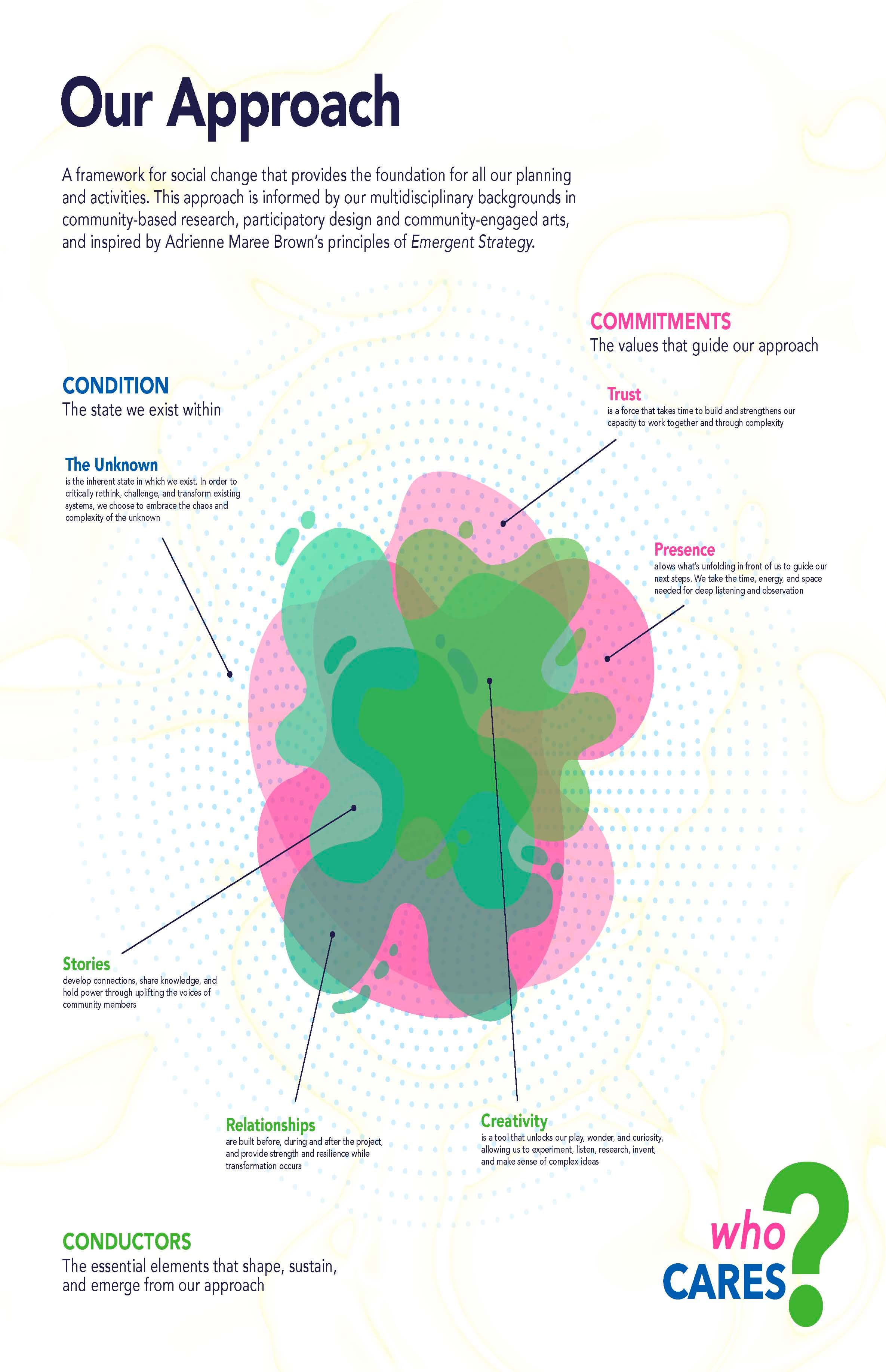
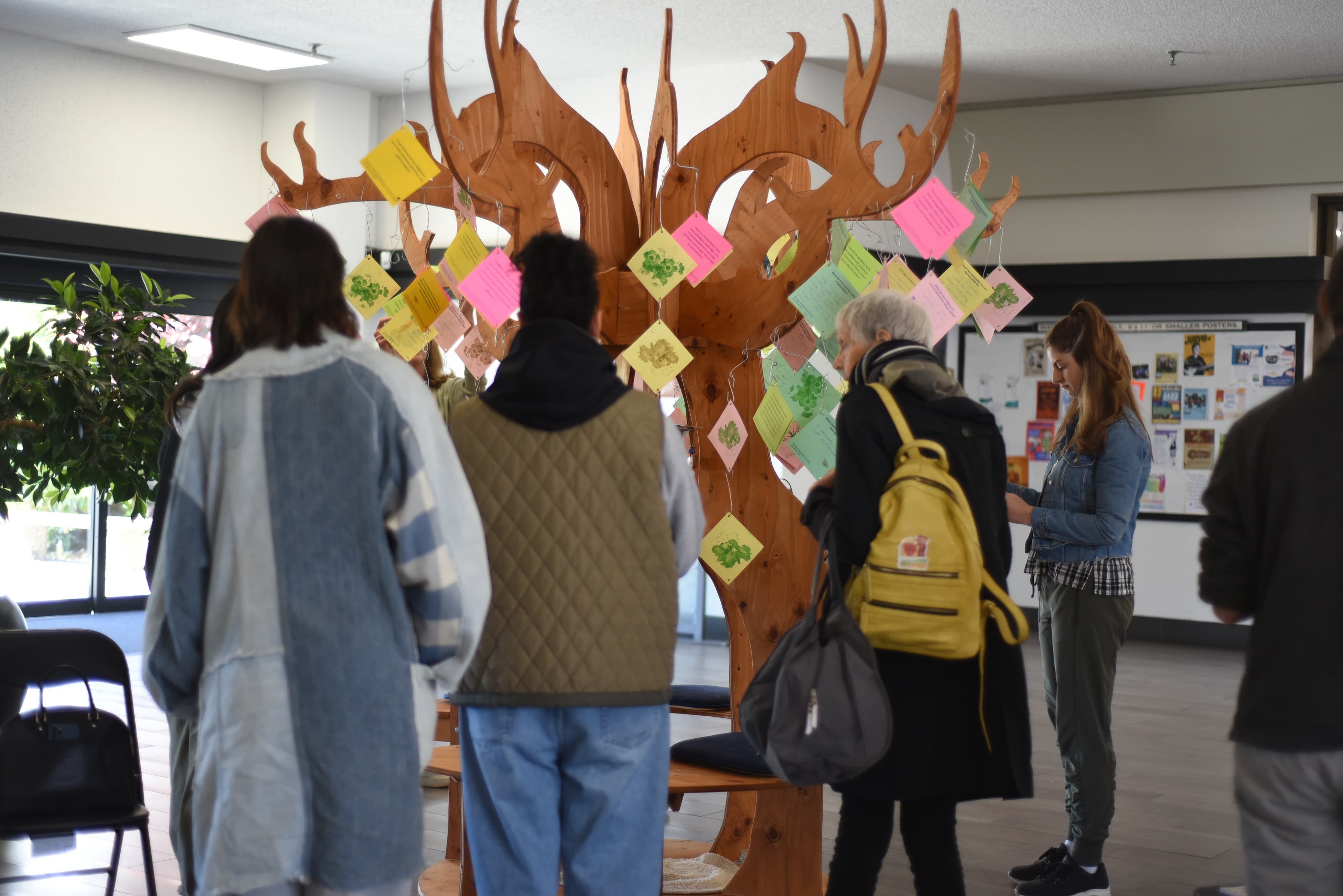
The team treated values not as a fixed list to agree on, but as living things to be surfaced, argued over, and reshaped. Working from adrienne maree brown's Emergent Strategy, we built a project "manifesto," then translated it — through team retreats, thematic analysis, and rounds of diagramming — into a visual framework of trust, presence, creativity, relationships, and stories, all held inside an appreciation of the unknown. Crucially, we made those values physical: a seven-foot wooden "Listening Tree" that travelled to 38 community sites collecting people's reflections, collage workshops that reinterpreted what they said, and community celebrations that brought the findings back to the people who shaped them.
Outcome
The work produced the Who Cares? Approach — a framework showing how creative, participatory methods can help a community surface and enact its own values around care. Alongside it came a community report and a published book, and the research was presented at the Design Research Society conference in Edinburgh in 2026.
Contribution to design research
- Diagrams and installations used as tools for thinking, not just illustration.
- Creative making (collage, installation, celebration) treated as a form of analysis.
- Relationship-building positioned as the real infrastructure of community research.
What I took from it
Participatory design isn't really about generating ideas — it's about building the trust and relationships that let ideas take root. The installations and reports mattered, but none of them would have landed without the slow, often invisible work of being present in the community over years.